
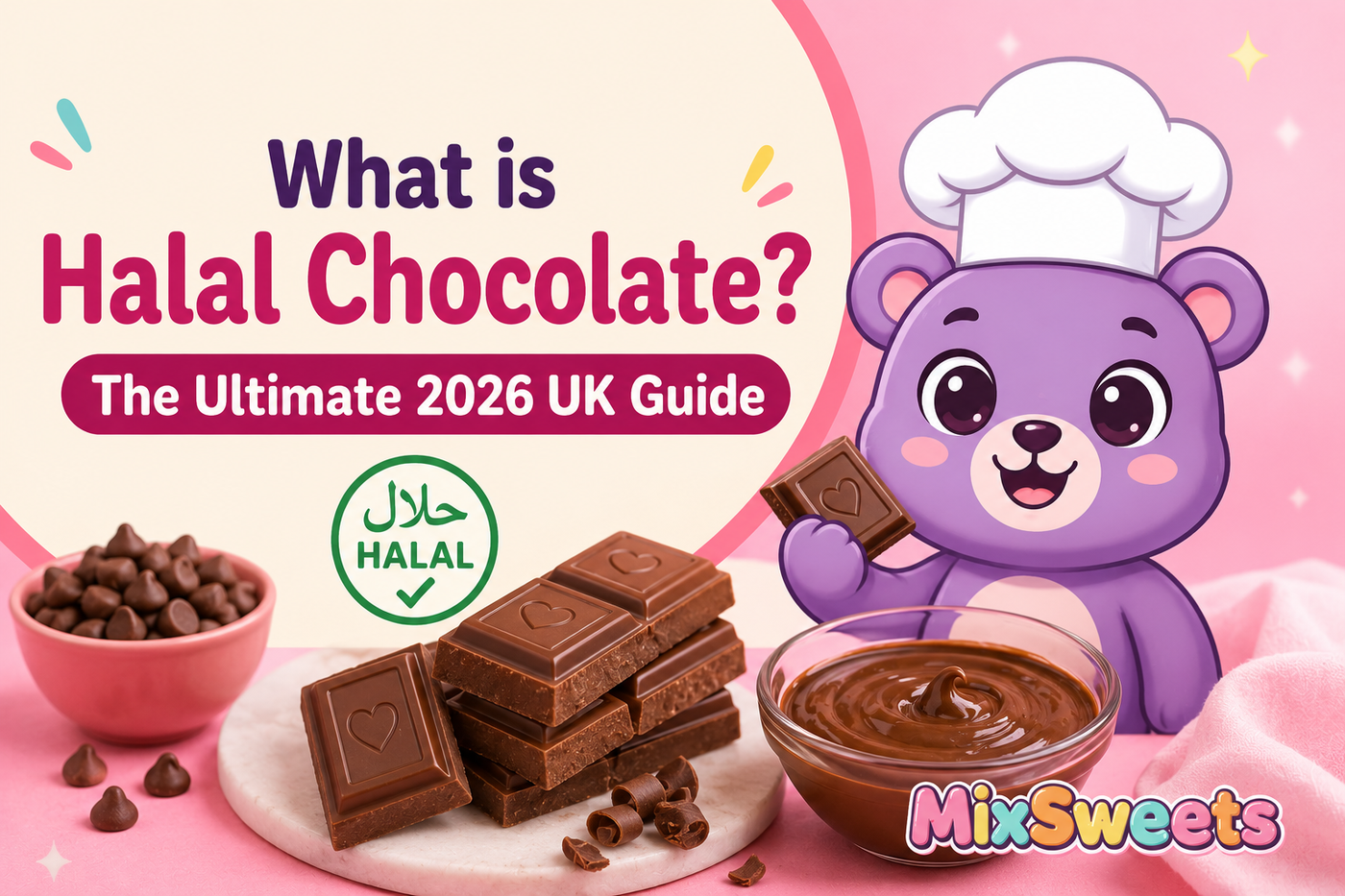
What is Halal Chocolate? The Ultimate 2026 UK Guide
Have you ever found yourself standing in the sweet aisle, holding a delicious-looking chocolate bar, and wondering: what is halal chocolate, and is this safe to eat?
If you follow Islamic dietary laws, ensuring that the food you consume is pure and permissible is a major priority. It is not just about physical nourishment; it is a direct matter of faith and conscious consumption. You might naturally assume that a simple, divine treat like chocolate would automatically get the green light. Sadly, the reality of modern manufacturing makes things a bit more complicated.
Finding out exactly what is halal chocolate can often feel like navigating a complex maze. It involves actively reading ingredient lists, understanding confusing E-numbers, and questioning the production methods behind the scenes.
In this massive, comprehensive guide, we are going to break down everything you need to know. By the end of this article, you will have a crystal-clear understanding of what is halal chocolate, which hidden ingredients to strictly avoid, and how to confidently shop for the best treats in the UK.
Let’s get started.
What is Halal Chocolate? The Basics
To understand what is halal chocolate, we first need to look at the word itself. In Islamic dietary guidelines, the term 'halal' simply means permissible or lawful. It acts as a stamp of approval, giving Muslim consumers the absolute green light to enjoy a product without compromising their religious beliefs.
At its very core, plain chocolate is made from three primary building blocks:
- Cocoa mass
- Cocoa solids
- Cocoa butter
These ingredients are extracted directly from the seeds of the cacao tree, known scientifically as Theobroma cacao, which translates to 'food of the gods'. Because these primary ingredients come entirely from plants, pure chocolate is naturally halal.
If you ever wonder what is halal chocolate in its purest form, it is simply this plant-based perfection. Cocoa butter, for example, is entirely plant-based and never contains animal fat.
If you prefer to keep things simple and plant-based, exploring a dedicated Chocolates collection or specifically looking for Vegetarian Sweets is a fantastic starting point.
Shop the UK's Best Retro Sweets at MixSweets today and satisfy your cravings with total peace of mind!
Why Isn't All Chocolate Automatically Halal?
If the cacao bean is perfectly fine, why do we even need to ask what is halal chocolate?
The problem arises when chocolate is processed. Many popular chocolates are manufactured in non-Muslim majority countries, where standard production lines do not cater to Islamic dietary laws. To create unique flavours, textures, and longer shelf lives, brands add extra ingredients.
This is exactly where things get sticky. If a single added ingredient is derived from a haram (forbidden) source, the entire chocolate bar becomes impermissible. Knowing what is halal chocolate means knowing how to spot these hidden extras.
The Hidden Haram Ingredients to Watch Out For
To truly master what is halal chocolate, you must become a label-reading detective. Here are the most common non-halal ingredients secretly lurking in popular chocolate bars:
1. Alcohol (Ethanol)
For many people, a splash of liqueur in a chocolate truffle sounds like a luxury, but it is strictly haram for Muslims. Alcohol (ethanol) frequently shows up in:
- Liquor-filled chocolate centers and pralines.
- Vanilla extracts, where alcohol is used as a carrier solvent.
You must strictly avoid labels that list "liqueur", "spirit", or "extract (alcohol)". Furthermore, even if the alcohol evaporates entirely during the cooking or production process, Islamic Jurisprudence still treats the final product as najis (impure).
2. Gelatin and Marshmallow Bits
Gelatin is a very common additive used to give sweets a soft, chewy texture. Unfortunately, a massive portion of commercial gelatin is derived from pork.
- It easily sneaks into rocky-road chocolate bars.
- It is frequently used in chewy nougat layers.
- It is the primary ingredient in standard marshmallow bits.
Unless the packaging explicitly states that the gelatin is halal or from a beef/plant source, you must skip it. If you love soft treats, safely shop from our Marshmallow collection. We highly recommend the halal-friendly Sweetzone Pink & White Mini Mallows Bag.
3. Whey Powder
Whey is a whole protein source that contains all nine essential amino acids. It is a byproduct of the dairy industry and is heavily present in commercial milk chocolate and white chocolate.
Why is it an issue? Whey is frequently extracted using pepsin. In the commercial food industry, pepsin is an enzyme most commonly sourced from the stomachs of pigs. Because whey powder is used as a cheap filler instead of more expensive cocoa-based alternatives, it is everywhere. If you are researching what is halal chocolate, always be highly suspicious of cheap whey powder.
4. Emulsifiers (E471 and E472)
Emulsifiers help bind ingredients together, keeping chocolate smooth and preventing it from separating. However, emulsifiers like E471 and E472 (mono- and diglycerides) can be highly problematic.
- They are heavily used in low-fat chocolates, spreads, and glossy coatings.
- While they can be plant-based, they are frequently derived from animal fats.
Unless the manufacturer confirms they use a plant-origin emulsifier, or the product carries a halal logo, it is best to leave it on the shelf.
5. E120 (Cochineal or Carmine)
Have you ever noticed those bright, red-tinted candy shells on your favourite chocolates? They might get their colour from E120.
E120 is a natural crimson dye extracted from the Dactylopius coccus, commonly known as the cochineal beetle. To produce this red dye, the insects are boiled in an ammonia or sodium carbonate solution. According to Islamic dietary laws, consuming products dyed with these insects is haram. You will often find E120 in M&M's and trendy ruby chocolate varieties. Always look for plant-based colourings instead.
6. Bacon and Animal Fats
It sounds surprising, but bacon has recently made its way into the trendy chocolate market. Bacon is smoked or salted meat made from the belly or back of a pig. Given its swine origin, it is entirely haram. Additionally, some lower-quality chocolates use cheap animal fats instead of cocoa butter for their glossy finishes.
Halal vs. Haram Ingredients Quick Reference Table
To make your shopping trips easier, use this quick reference table to remember what is halal chocolate and what is not:
|
Ingredient |
Status |
Where It Hides |
|
Cocoa Butter |
Halal (Plant-based) |
The base of all pure chocolate. |
|
Ethanol / Liqueur |
Haram |
Truffles, pralines, vanilla extract carriers. |
|
Pork Gelatin |
Haram |
Rocky road bars, nougat, marshmallows. |
|
Whey Powder |
Questionable |
Milk chocolate fillers (often uses pig pepsin). |
|
E120 (Carmine) |
Haram |
Red candy shells, ruby chocolate (made from beetles). |
|
E471 / E472 |
Questionable |
Glossy coatings (can be animal fat). |
Build Your Own Pick N Mix Pouch today! Choose your favourite 100% safe, halal-friendly sweets with our Create Your Own 1000g Pick & Mix Pouch, or browse our massive Pick N Mix collection.
Got a query? Email us at support@mixsweets.co.uk
The Hidden Danger: Cross-Contamination in Chocolate Manufacturing
Understanding what is halal chocolate is not just about reading the ingredients list. You also have to look at the factory where it was made.
You might find a chocolate bar where every single ingredient is perfectly permissible. However, the manufacturing process can instantly ruin its halal status. This hidden danger is known as cross-contamination.
Many mainstream chocolate factories produce multiple product lines under one roof. If a factory makes halal-friendly milk chocolate on the exact same equipment used to produce rum truffles or pork gelatin candies, cross-contact happens. If the machines are not properly cleaned and sanitised between batches, trace amounts of haram ingredients will sneak into your food.
This is why finding dedicated halal production facilities is so vital. A dedicated facility means no non-halal items ever enter the building, preventing any risk of contamination.
If you want to skip the worry and enjoy classic flavours safely, browse our Retro Sweets collection. We ensure all our stocked items meet your strict dietary needs, helping you drive your cravings away with pure satisfaction.
How to Verify What is Halal Chocolate: The Certification Stamp
Standing in the supermarket aisle squinting at tiny ingredient labels can be incredibly frustrating. Thankfully, official halal certification takes the guesswork out of the equation.
A halal certification is a stamp of assurance from an expert auditing body. It proves that the chocolate has been rigorously inspected from bean to bar. A certified product guarantees there are no traces of alcohol, no pork derivatives, and no shared equipment risks.
When looking for what is halal chocolate, keep an eye out for these globally recognised halal certifiers:
- HFA (Halal Food Authority): A prominent and highly trusted certification body based right here in the UK.
- HMC (Halal Monitoring Committee): Another major UK organisation ensuring strict compliance with Islamic dietary laws.
- HFCE (Halal Food Council of Europe): They audit and certify products across Europe to guarantee they contain no alcohol or pork.
- AHF (American Halal Foundation): A major certifier in the USA with high global recognition.
- JAKIM: The official certification body of Malaysia, respected worldwide.
- BPJPH: The official halal authority in Indonesia.
For an easy, certified treat that is perfect for snacking, check out the incredibly popular Kingsway Fried Eggs Bag. It gives you that classic sweetshop taste without any of the questionable ingredients!
Is Your Favourite Brand Actually Halal?
Now that we know the rules, it is time to put popular brands to the test. Let's look at some of the biggest names in the UK and see if they pass the test for what is halal chocolate.
Godiva
If you love luxury, you are in luck. Godiva has worked with the HFCE (Halal Food Council of Europe) to ensure many of their chocolates are halal certified. They guarantee these specific certified chocolates contain absolutely no alcohol, pork, or pork derivatives.
Nestlé (KitKat, Smarties, Quality Street)
Nestlé operates several halal-certified factories in Malaysia, Australia, and the Middle East. Products made in those specific factories proudly wear a halal logo.
However, in the UK and the US, their production lines are generally logo-free. Because they may share equipment with non-halal products, you cannot assume a UK-made KitKat is automatically safe.
Mars (Snickers, Twix, Bounty, M&M's)
Similar to Nestlé, Mars products are only certified halal in select global regions. While many of their UK and EU products use plant-based ingredients, they lack official certification.
Because they often share production lines with non-halal items, you must evaluate them on a product-by-product basis or contact Mars Consumer Care with your batch code to be absolutely certain.
If you prefer to avoid the stress of checking batch codes, dive into our Jelly & Gummies collection. We clearly label our sweets so you know exactly what you are eating! We highly recommend grabbing a Sweetzone Cola Bottles Bag for a fun, fizzy, and 100% safe treat.
Cadbury
Cadbury chocolates follow the same regional rules. They are certified in some countries, but not all. If your UK Cadbury bar does not have a halal logo, you must scan the ingredients for emulsifiers like E471 or E472.
If you are unsure, you will need to write to Cadbury directly to ask for the latest certificate regarding that specific product.
Lindt
Lindt does not currently have a corporate halal certification for its global operations. They state that their dark chocolate "Excellence" tablets contain no alcohol or animal fat.
However, without a halal audit, there is still a risk of cross-contamination with non-halal ingredients on their factory floors.
Shop the UK's Best Retro Sweets! Why risk cross-contamination? Buy from a trusted source. Treat yourself or a friend from our beautiful Gifts collection today.
3 Pro Tips for Choosing Safe Halal Chocolate
If you are still struggling to determine what is halal chocolate while shopping locally, use these three expert tips:
1. Go Dark and Dairy-Free Dark chocolate naturally contains fewer additives than milk or white chocolate. By choosing a vegan or dairy-free option, you completely eliminate the risk of animal-derived whey powders or fats. However, you must still double-check for alcohol-based flavourings like vanilla extract. Explore our safe Dairy Free Sweets to find incredible alternatives.
2. Support Small, Artisanal Brands Massive multinational corporations often struggle to certify every factory. Smaller, artisanal chocolate makers have much more control over their ingredients and production lines. They can easily ensure their facility is free from cross-contamination.
3. Contact the Manufacturer Directly If you pick up an imported chocolate bar with no halal logo, do not just assume it is safe. Send a quick, polite email or a direct message on social media to the brand. Public questions on platforms like Twitter or Instagram often get very fast responses.
By actively asking brands about their halal status, you help drive the demand for better transparency and more certified products in the UK market.
Halal Chocolate for Eid, Gifting, and Special Occasions
- Dedicated Eid Collections: Premium chocolatiers like Godiva offer specialized seasonal boxes certified by European halal councils, making luxury gifting effortless.
- Artisanal Single-Origin Chocolate: Brands like Firetree focus on single-estate, bean-to-bar dark chocolate with official Halal Certification Europe (HCE) auditing. These make exceptional presents for true chocolate connoisseurs.
- Traditional Fudge & Confectionery: If you want a rich, decadent texture without the worry of non-halal emulsifiers, exploring an authentic Fudge & Toffees collection offers a fantastic, indulgent alternative.
Delicious Halal Alternatives: Beyond the Chocolate Bar
Frequently Asked Questions: What is Halal Chocolate?
1. What is halal chocolate?
2. Does cocoa butter contain animal fat?
3. Are liquor-filled chocolates halal if the alcohol is cooked off?
4. Is vegan chocolate always halal?
5. Why is whey powder a concern in milk chocolate?
6. What makes the emulsifier E471 non-halal?
7. Why is red-tinted chocolate or candy shell sometimes haram?
8. Is Cadbury chocolate halal in the UK?
9. Is Nestlé KitKat halal in the UK?
10. Is Lindt chocolate halal?
11. How can I verify if chocolate is halal if there is no logo?
12. Which halal certification bodies are most trusted in the UK?
13. Does halal chocolate taste different from regular chocolate?
14. What are the best accidental halal chocolate options?
15. How can consumers encourage more brands to get certified?
Final Verdict: Enjoying Halal Chocolate with Complete Confidence
Ready to Treat Yourself?
Build Your Own Pick N Mix Pouch today! Choose your favourite halal-friendly treats and get fast delivery straight to your door across the UK.
Related Posts
The Ultimate Guide to Sweets Beginning With A (Plus U, I & Z!)
Barratt Jelly Beans: The Complete UK Guide to Flavours, Ingredients, Buying & Pick n Mix
Create Your Perfect Pick & Mix: Choose Your Favourite Sweets
Leave a Reply